
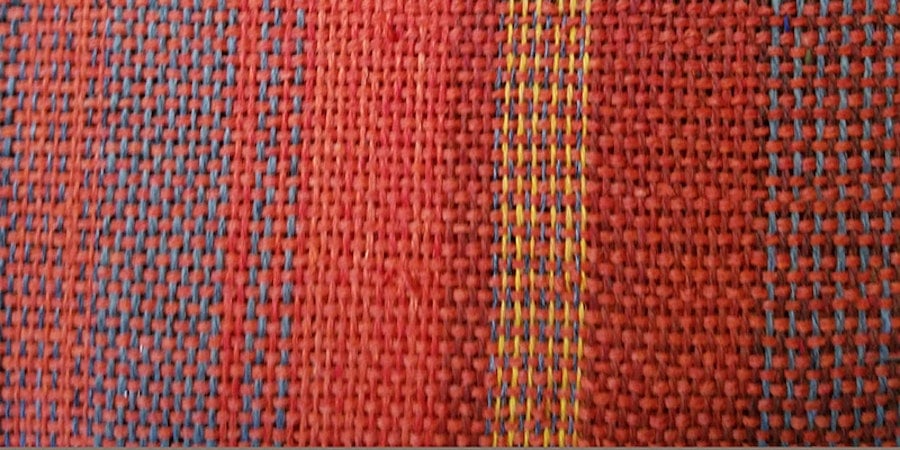
I’ve taught a fair amount of beginning weaving on rigid-heddle and floor looms, and I’ve noticed that many beginners are self-critical about their selvedges and beat.
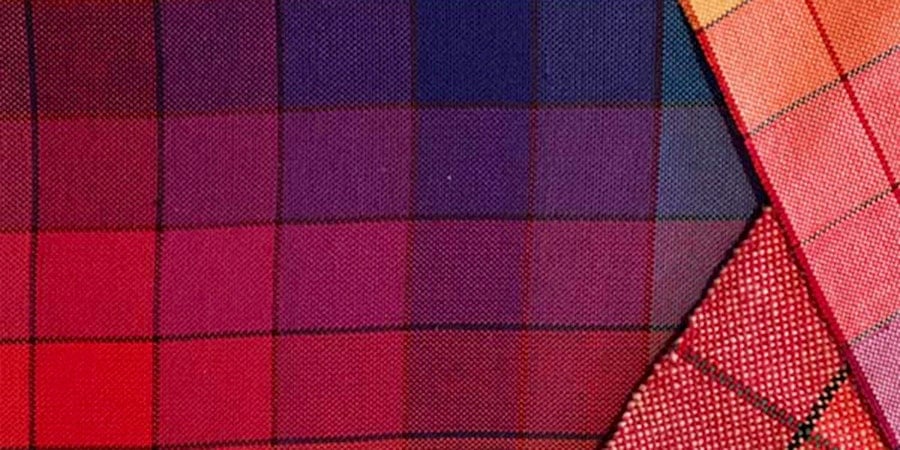
Deb Essen will teach you the art of choosing colors for weaving design, so you always end up with success. Start here with some basic color theory!
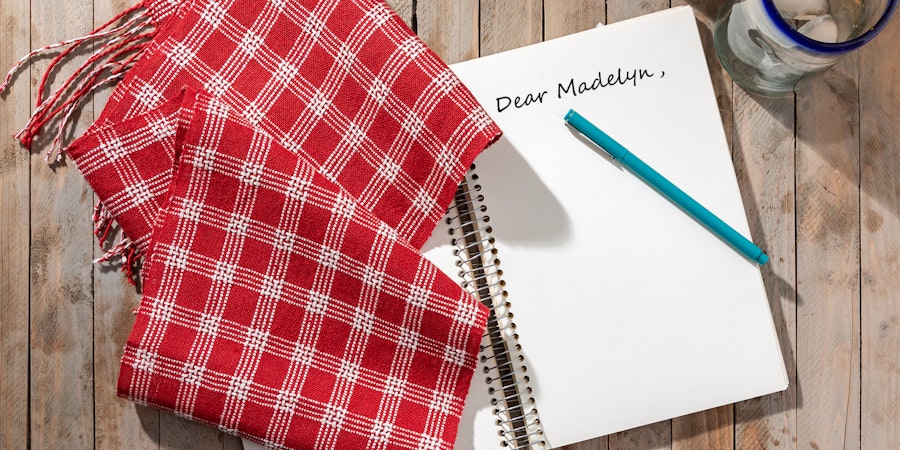
I’m wanting to weave my first piece in deflected doubleweave but I’m not sure how to handle the selvedges (I have to weave 4 picks of one color followed by 4 picks of another).
I have only been weaving for three years and am fascinated with doubleweave, but how do I determine the sett for a doubleweave project?
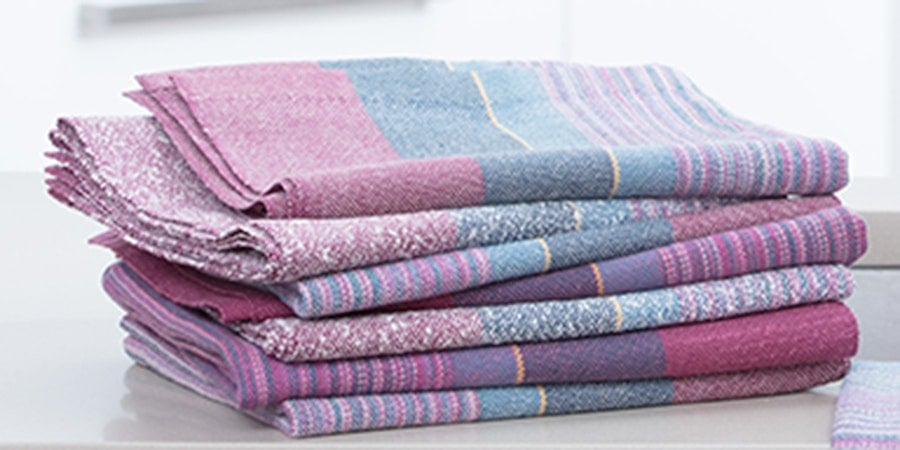
Kicking the weaving rock means trying new things without a really firm plan in mind. About 15 years ago, I wove a striped rep weave runner.
I have been using your method of tying on a new warp to an old one for several years. I’m wondering how you calculate warp length for the new warp. I’m not sure how to determine the amount of loom waste for the new warp and I don’t want to run out of it!
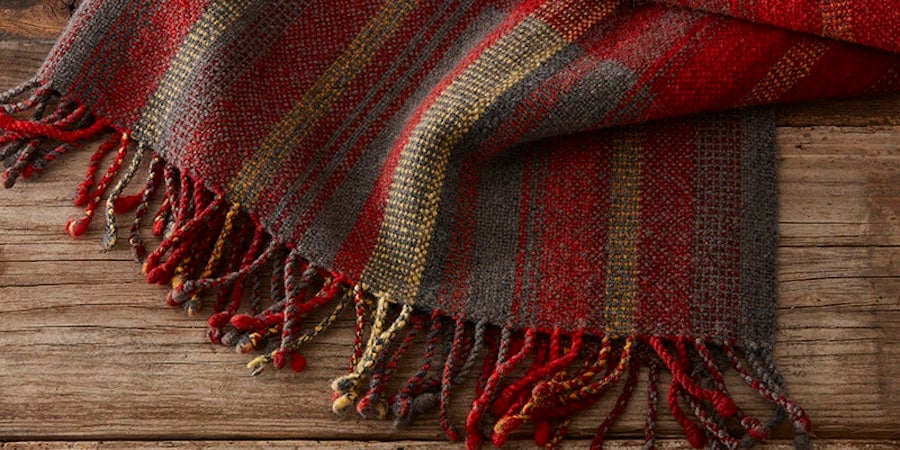
For this doublewidth Harrisville wool blanket from the Best of Handwoven: Doubleweave, Doublewidth! eBook, I decided to push the time I had with the warp at the loom by designing in the reed.
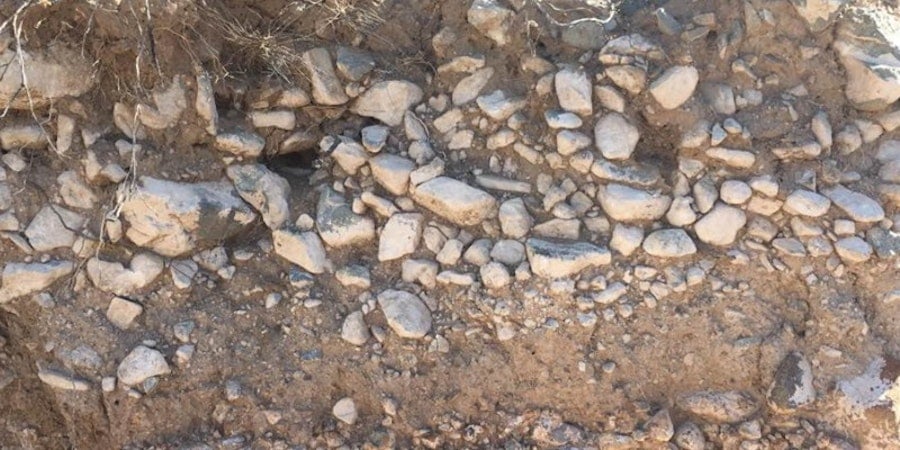
During my tenure at Handwoven, I’ve read many articles on color in weaving. “Be careful,” they say, “sometimes colors that look good next to each other on the shelf will turn muddy on the loom.” But inspiration can come from anywhere if you’re open to it.
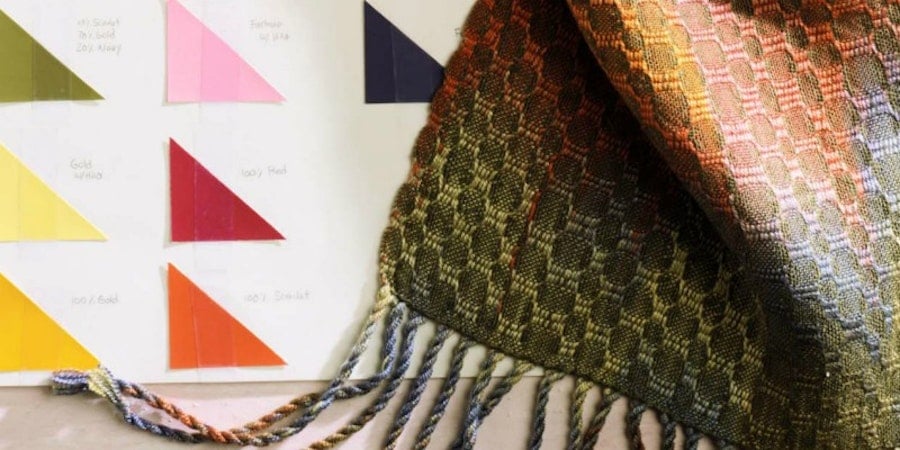
One way to maximize the pleasure of color blending is to paint the warp, choosing and mixing as many colors as you like. As soon as the door is open to creating absolutely any color, the problem becomes: what colors to make?